Flexible Revolve End Conditions in Part Studios
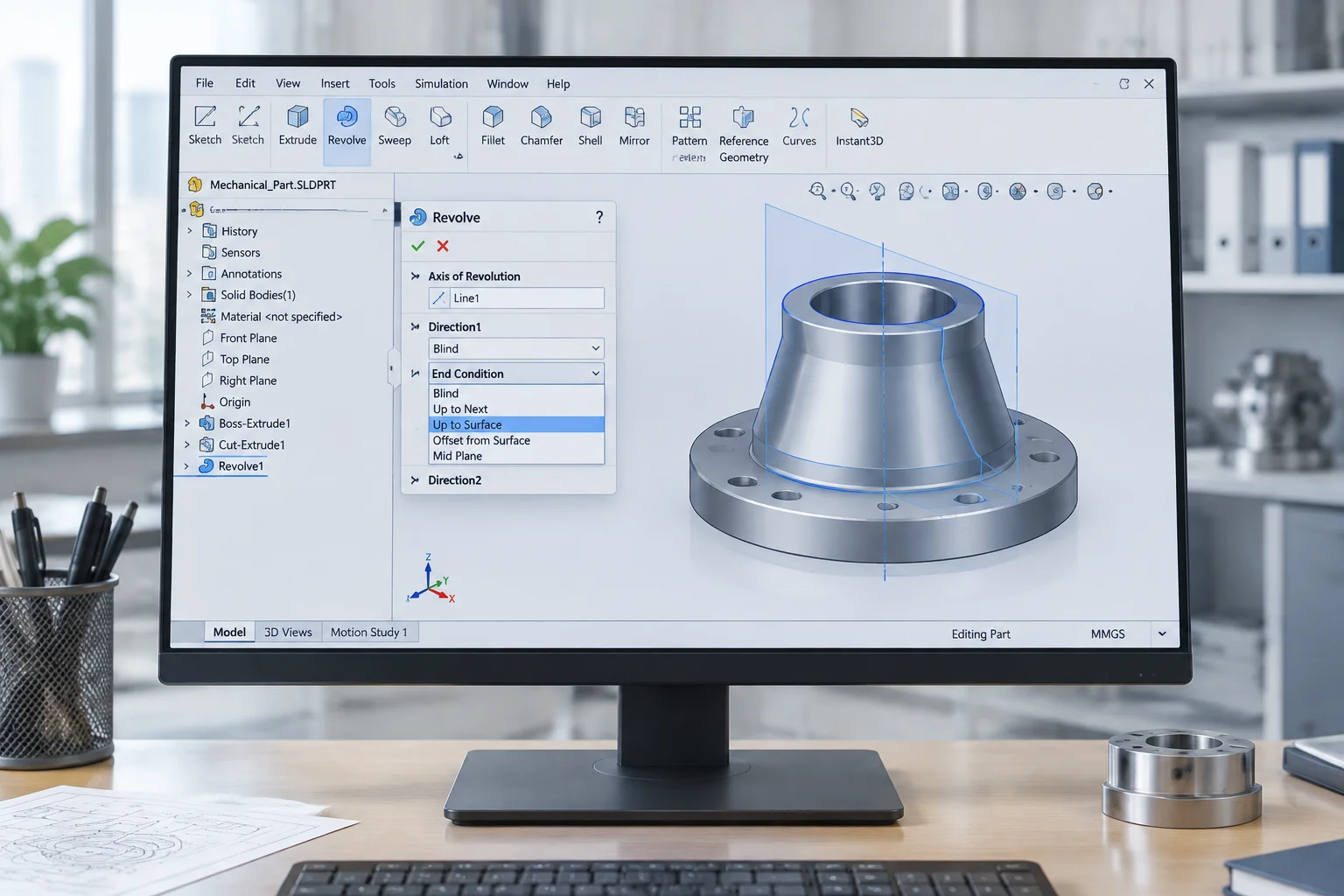
Parametric modeling often demands revolving a sketch profile up to a non-parallel face while terminating the opposite direction at a defined angular degree. In earlier builds of Onshape, executing this geometry required creating supplementary construction planes, offset planes, or split body operations. Release 1.209 eliminates this extra overhead by enabling dual, independent end conditions directly inside the Revolve dialog.
Designers can now configure Direction 1 as Up to Entity and Direction 2 as Blind with a numeric angle limit, or combine Up to Vertex with Up to Face simultaneously. Because the geometry updates natively against the target boundary, upstream modifications smoothly propagate through the feature tree without leaving broken topological references.
Assembly Mate Connector Precision and Diagnostics
In cloud-native assemblies containing hundreds of imported fasteners and sub-assemblies, resolving mate connectors can create bottleneck cycles during rapid mouse dragging. Release 1.209 refines how the cloud solver isolates unconstrained degrees of freedom, accelerating kinematic motion updates across multi-body linkages.
Kinematic Solver Performance Benchmark
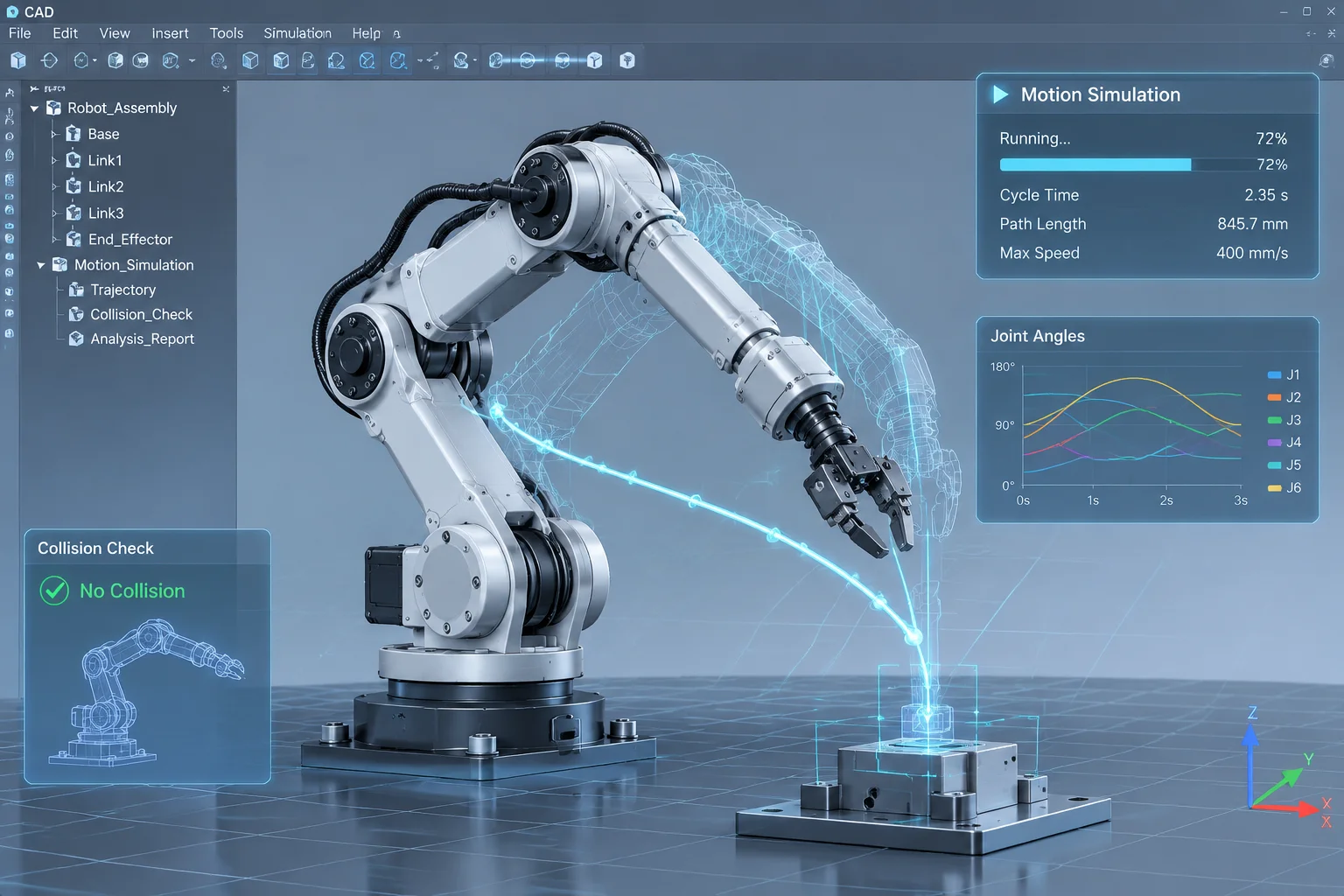
Internal regression tests indicate a 28% reduction in browser client lag when manipulating high-DOF robotic arms and suspension linkages, especially where revolute and cylindrical mates interact with tangent limits.
Additionally, the Mate Diagnostics panel now displays explicit warnings when two mate connectors compete for the same angular degree of freedom. This makes diagnosing overconstrained mechanisms straightforward, allowing engineers to isolate conflicting fasteners before committing changes to the team repository.
Collaboration, API Updates, and Drawing Pipeline Polish
Beyond geometric enhancements, Release 1.209 introduces notable drawing annotation upgrades and FeatureScript API access. Production teams generating customer fabrication drawings gain tighter control over section cut indicators, center mark offsets, and multi-sheet revision tables.
- FeatureScript endpoints now expose the flexible revolve parameters for programmatic custom feature development.
- Section views now retain parent hatch angles when components are shifted or replaced in assembly workspaces.
- Branch merging presents clearer visual diff highlights when mate connector origins are re-anchored by another user.