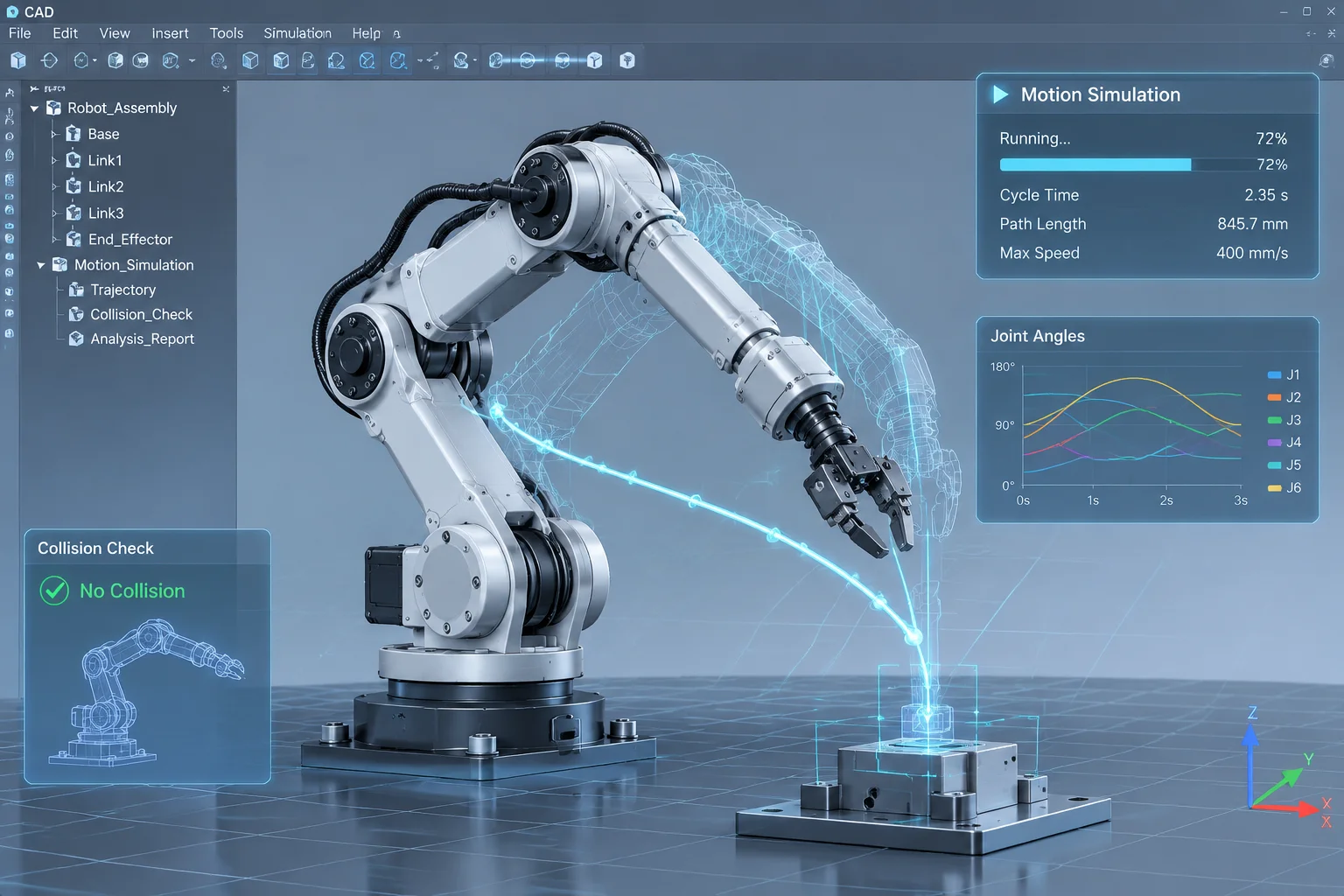
The Kinematic Disconnect in Traditional Robotics Pipelines
For years, transferring an articulated mechanical design from CAD software to a robotics physics solver involved clumsy intermediate formats. Engineers routinely exported raw meshes alongside hand-edited URDF or SDF XML files. Every change to a mounting hole, bracket fillet, or actuator linkage demanded manual re-exporting, re-centering origin pivots, and re-entering joint limit radians. Minor discrepancies between the physical geometry and the simulation file caused actuators to jitter or linkage limits to fail silently during synthetic testing.
Universal Scene Description (OpenUSD) tackles this friction head-on. Conceived as a scalable scene composition architecture, OpenUSD treats geometry, hierarchies, materials, and physics schemas as composable layers. When paired with Onshape's pure cloud data model, parametric assembly structures turn into deterministic, structured USD stages without losing mechanical intent.
Mapping Mate Connectors to USD Physics Schemas
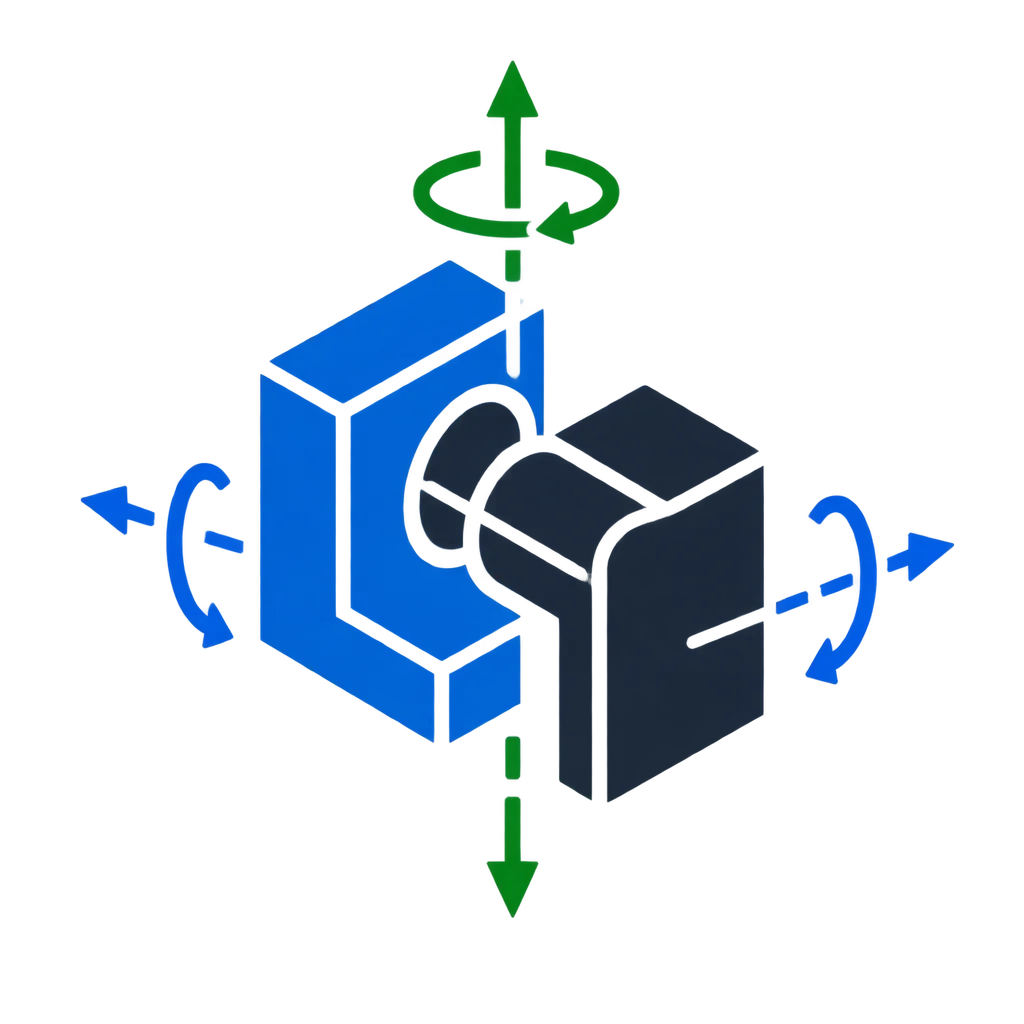
The core breakthrough lies in Onshape's mate connector paradigm. Unlike legacy parametric systems that rely on separate planar, cylindrical, and offset mates that fight for solver priority, Onshape builds mechanical joints from coordinate system frames attached to geometric entities. Revolute, prismatic, cylindrical, and planar relations define degrees of freedom locally with clear angular limits.
Eliminating Coordinate Frame Drift
Traditional mesh exporters frequently drop native local coordinate system orientations during export, forcing simulation technicians to reconstruct transform matrices by eye. The OpenUSD integration extracts the native mate connector transform, embedding exact physics joint anchor coordinates and limits directly into the output USD stage.
When streaming this data to an OpenUSD stage, revolute mates translate seamlessly into UsdPhysicsRevoluteJoint primitives, complete with upper and lower limit attributes. Physical attributes like mass, volume, principal moments of inertia, and center of mass calculate on the fly from assigned material densities. Downstream simulation engines receive verified rigid bodies ready for friction contact calculations and dynamic trajectory evaluation.
Practical Workflows for Automation and Synthetic Data
Integrating OpenUSD directly into cloud CAD changes how multi-disciplinary robotics teams iterate. Design changes made by hardware engineers propagate downstream through automated API webhooks, updating training environments without manual intermediate files:
- Hardware teams update chassis brackets or end-effector tooling in Onshape while the cloud architecture generates updated USD stages automatically.
- Sensor placement points defined by mate connectors translate to simulation camera origins and LiDAR positions with zero spatial distortion.
- Machine learning teams run reinforcement learning policies against real-time CAD iterations, eliminating weeks of dead time waiting for file conversions.